Food
- Regional Cuisine: Ecuadorian cuisine is diverse and influenced by the country’s coastal regions, Andes mountains, and Amazon. Meals commonly include rice, potatoes, corn, beans, vegetables, and meat or seafood.
- Dietary Restrictions: There are no universal national dietary restrictions. However, some families avoid red meat during religious holidays such as Holy Week.
- Traditional Holiday Food: During Holy Week, a traditional dish called fanesca—a thick soup made with grains, beans, vegetables, and salted fish—is commonly prepared.
- Dietary Preferences: Vegetarian diets are becoming more common in cities. Some traditional dishes use cheese, eggs, meat broths, or peanut-based sauces, especially in the Andes region, so asking about allergies or preferences can be helpful.
- Meal Atmosphere: Meals are usually relaxed and social, with lunch often being the largest meal of the day. A typical lunch may include several courses such as soup, a main dish with rice and vegetables or meat, and a drink or dessert.
- Common Drinks: Fresh fruit juices made from fruits such as passion fruit, mango, guava, papaya, or naranjilla are frequently served with meals.
- Grocery Shopping: Many people shop at both supermarkets and traditional open-air markets where fresh fruits, vegetables, herbs, and grains are widely available.
- Common Dishes: Popular foods include llapingachos (fried potato patties served with eggs, sausage, avocado, and peanut sauce), encebollado (fish soup with onions and spices), bolón de verde (mashed green plantain balls filled with cheese or meat), ceviche, and hornado (slow-roasted pork).
- Food Culture: Ecuadorian cuisine reflects strong agricultural traditions and emphasizes hospitality and shared meals.
- Seafood and fresh ingredients are widely appreciated — especially in coastal-inspired dishes, as fish, shrimp, rice, and plantain-based meals are very common.
- Meat is generally well accepted — chicken, beef, and pork are widely eaten, but preparation style and freshness matter more than strict restrictions for most guests.
- Pork is commonly consumed, so it is not a general restriction, but individual preferences may still apply.
- Spice levels are usually mild — Ecuadorian cuisine is typically not very spicy, and guests may prefer seasoning on the side rather than heavily spiced dishes.
- Vegetarian or special diets exist but are less common — it’s best to ask individually rather than assume.
- Dairy, gluten, and other allergies are present as anywhere, so checking in advance is appreciated.
- Flexibility and variety are valued — offering a balanced meal with familiar staples like rice, proteins, and vegetables is usually well received.
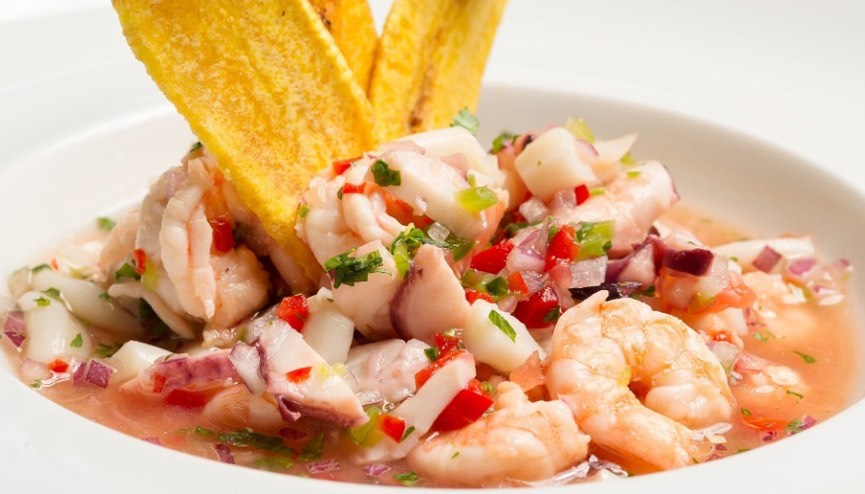
Ceviche (seh-VEE-chay)